Reading and Writing Activities for Elementary Students
Last updated on Jan 28th, 2022
Do your students grumble when it'south time to practice writing? Is getting them to write an essay about as much fun every bit getting grapefruit juice in your eye? Maybe it's time to endeavor some fun writing activities instead. Here are ten of our family's favorite creative writing activities for kids.
Breaking Kids out of a Writing Rut
We've been through so many stages of learning to write in our homeschool: reluctant writers, frustrated writers, bored writers, curious writers, obsessive writers (my favorite!).
Over the years, nosotros've tried endless writing programs and curricula in a constant effort to keep writing fun and interesting. While we've had success stories with a few programs, I find one of the best ways to keep kids engaged with writing is to integrate fun activities aslope our regular curriculum.
Hither are ten of my favorite ways to make writing fun for kids.
x Fun Writing Activities for Kids
1. Write a comic book/graphic novel
Using a template, students create their own comic strip or graphic novel complete with spoken communication bubbles and annotations.
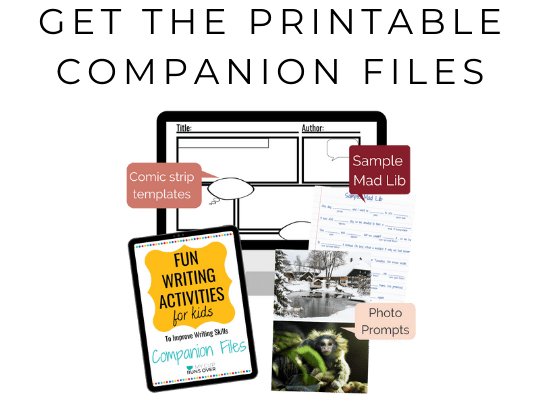
First, you lot'll need a comic strip template. You tin can draw your own or allow kids to do so if they cull. Or, download the companion files at the end of this post to grab some pre-formatted templates.
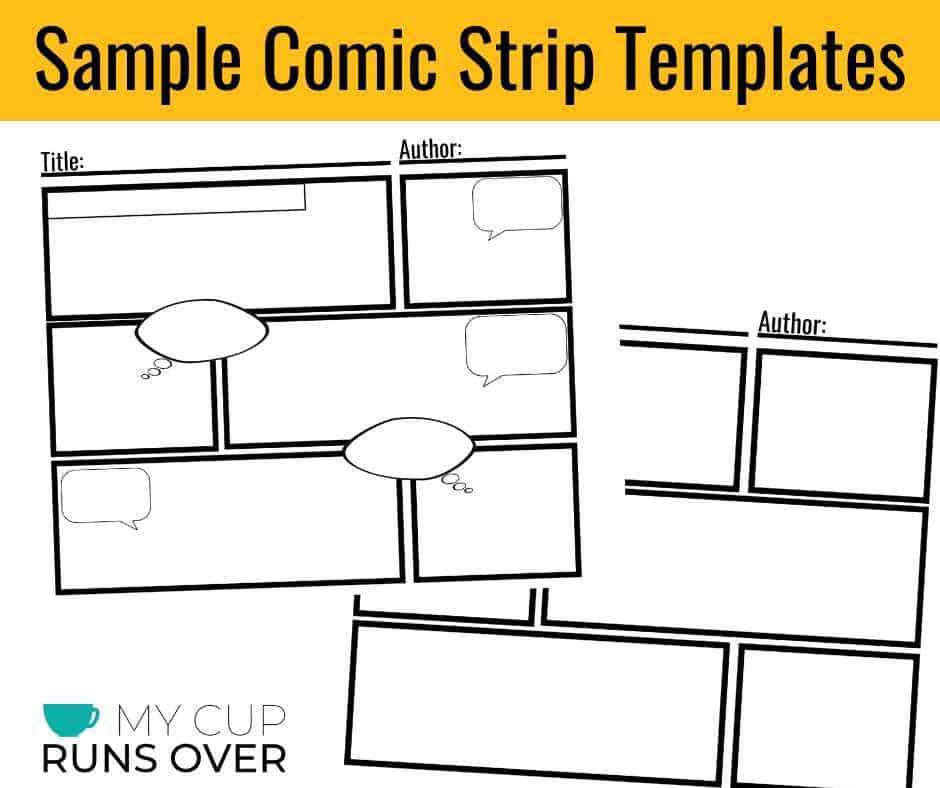
The amount of guidance each student needs will vary depending on their age and ability. By pattern, comics and graphic novels are straight to the point. They don't take room for any superfluous content.
Therefore, it's a good thought to take time beforehand and program what's going to happen in the short story, either using a story planner or just jotting down a quick storyboard sketch. They'll want to take a sense of what's going to go in each square before they kickoff drawing the pictures in earnest.
Take them draw the pictures get-go and then add speech and thought bubbling and annotations. If possible, brandish the finished works so anybody can savor them.
Kids are naturally drawn to the comic volume or graphic novel format. It's fun information technology'due south engaging, information technology moves quickly, and there's lots of pictures.
But the infinite constraints make information technology necessary for them to think through their story before they start writing and this is such an of import skill to develop. Usually, when we're writing an essay or a brusk story, nosotros just write whatever comes into our minds without editing every bit we go. Oftentimes, we write manner more than nosotros need to and when we go back to read it later, we find we oasis't fifty-fifty fabricated our point.
Learning how to outline and determine in accelerate the all-time way to get a betoken across is an important skill and creating comic strips is a bully mode to acquire it.
This writing activity can be adapted for any age range, kindergarten to course 12. Younger kids may demand assistance with press small-scale letters.
2. Write a Story Together
What it is:
Students work in pairs or groups or with a parent or writing coach to write a short story together.
There are many ways that two or more than people can piece of work together to write a short story. The method you choose volition depend on who you're working with, how much time you lot have, and what your goals are for the activity. Here are a couple of options:
- Writing together: Kids work in pairs or groups (with or without a parent, teacher, or writing coach) to collaborate on each role of the story. Everybody pitches ideas and the grouping comes to a consensus about them. Kids tin can take turns acting as the scribe for the group (an developed can do the writing for younger children).
Agree in advance about how you lot'll know when the project is finished. Are you aiming for a sure number of words or pages? Or practise you merely want to come across a story with a commencement, center, and cease? Perhaps you lot want them to practice a specific concept, like seeing how many similes and metaphors they can use.
Determining and articulating the goal alee of time ensures everyone knows what they're working towards.
- Writing consecutively. Students accept turns writing sections of the story. For instance, they might alternate paragraphs or pages, depending on how long information technology is.
You can either take them hold in advance near the topic and plot points or you could add together a twist by non letting them talk about information technology in accelerate and having them improvise.
Another variation is to have a group of students working together and have each of them write a sentence or a paragraph of a story so pass their story on to the person beside them. That person then continues on with that story while the 1 who started information technology is standing on with another person's story themselves. Continue passing them around in a circle until anybody has added to each story and then tin share them with each other.
- Write concurrently: Kids determine on a plot for a story and then divide and conquer. For example, they might come with a story that has multiple perspectives and have each person can write scenes from a different perspective. After, they can integrate them into a cohesive, well-rounded story.
In my experience, kids love creating stories much more than they actually love writing them, especially when they're younger. The physical human activity of getting their thoughts onto paper is fourth dimension-consuming and because their hands can't movement as fast as their thoughts, kids ofttimes get discouraged.
Collaborating with a sibling, a friend, classmates, or adults gives them the firsthand reward of progressing in a story without necessarily having to bear the burden of doing all the work themselves.
This writing activity can be adapted for any age range, kindergarten to grade 12. Lower simple students should piece of work with a parent, teacher, or writing coach who tin can guide the collaboration and tape the story for them.
3. Retelling a Favorite Story
What it is
Reading or listening to a favorite story and retelling information technology or rewriting it in their own words.
Ask a student to choose i of their favorite books. For younger kids, this would ideally exist a lath book or a picture volume, while older students might like a chapter volume or novel. If choosing a novel, make sure it'due south one they're very familiar with so they don't demand to re-read the whole thing.
If it'due south a shorter book, read it together. Then, ask the student to either narrate or write downward the major parts of the story in their own words.
Another variation: if y'all have more time, go a big piece of paper or poster board and inquire the kids to depict a map of the story. Then, accept them draw and cut out pictures of the story'due south characters and move them effectually the map as they tell the story.
Writers acquire to write by imitating other writers. Reading a favorite story with the goal of committing its key points to retention is an important step toward condign a improve storyteller. By telling and retelling popular tales, students acquire to intuit the elements of a great story.
This writing activity tin can be adapted for any historic period range, kindergarten to grade 12. Students who are not yet reading or writing volition need someone to read the story and transcribe their words.
4. The Finish. Or, The New Beginning.
What it is
Students choose a book they love and requite it a new ending or a sequel.
Accept students cull a favorite volume and make up one's mind whether they're going to rewrite the ending or write a sequel.
Enquire them questions to help them give structure to their writing. Here are some examples:
If re-writing the ending:
- What did you similar near the current ending?
- What didn't you like?
- What questions did you accept at the end of the book?
- What event in the story, if inverse, would have resulted in a completely dissimilar consequence?
- Did the main graphic symbol get what they wanted or no? What would have happened if they didn't (or did)?
If writing a sequel:
- Which character(s) in this story did you wish had bigger roles? What else might you accept liked to know well-nigh their sides of the story?
- What do you think happened after the last affiliate of the story?
- What other threats or enemies might all the same be waiting for the principal character?
- Think almost the life of the book's characters at the end of the story. What new character or event might completely topple the balance they've institute?
Asking students to write a new catastrophe or sequel takes away the pressure level of having to come up with an idea from scratch, while yet giving them a valuable opportunity to better their writing skills.
As well, it helps them hone in on the skill of writing endings, which are often the hardest role of the story to write.
This writing action tin be adapted for grades 4 to 12.
five. Dictating a Story
What it is
Dictating a story using voice typing and so editing it
Using a Google Doc, click on the Tools menu and select Phonation typing (or printing CTRL+Shift+S). Click on the microphone icon and have the educatee start dictating.
When they're done, click the microphone again. They tin even make changes or fix punctuation every bit they become without disabling the microphone.
Again, people recollect much faster than they write or even blazon.
For emerging writers especially, printing each letter takes so long that past the time they've gotten a full sentence down, they may accept lost their steam. Being able to dictate the story at the speed they think and talk is highly motivating and puts the focus on thought generation and plot progression, not on the physical human action of writing.
Too, this action gives kids a wonderful opportunity to practice their editing skills.
This writing action can exist adapted for any age range, kindergarten to grade 12. Younger kids volition need help with editing.
vi. Create Mad Libs
What it is
Students blueprint Mad Libs for you or for each other
If your students take never played Mad Libs, you will first need to explain the game to them and perhaps have them do a practise circular to go used to the concept. Here's a sample Mad Lib you can utilize. It's besides included in the companion files download at the bottom of this post.

Then have them fix the story. They can either create it from scratch or use an existing text. For instance, they might copy out the first paragraph or ii of a volume. Take them write it on lined paper, double spaced.
Side by side, they can choose some words to remove from the story. In one case they've erased the words they want to remove, they should draw a line for the blank word and write a hint under the line to bespeak what kind of give-and-take is needed.
It's helpful if they have an agreement of nouns, verbs, adjectives, and adverbs. If they don't, this is a great time to innovate these concepts. They might also use qualifiers such every bit 'something you habiliment,' or 'a job people practise.'
Here's how a finished Mad Lib might look:
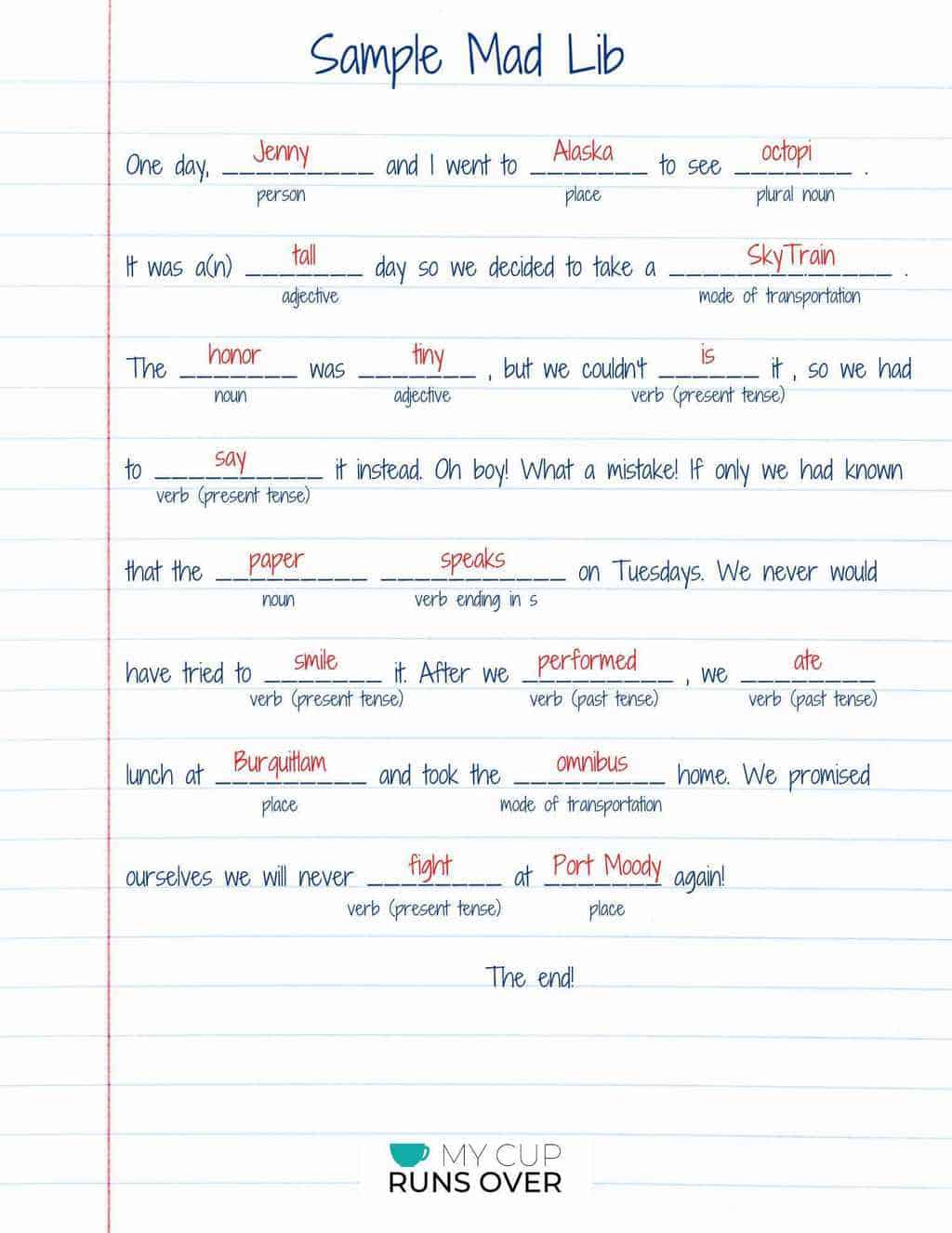
When they're done preparing the story, someone else (a friend, parent, teacher, etc.) gives them the words needed to fill in the blanks. As the respondent gives their answers, the student writes them in the blanks. When all the blanks are filled, the student reads the finished piece of work aloud.
I've nonetheless to run across a kid who doesn't dearest Mad Libs. They're and so much fun! Kids become a kick out of making up a actually light-headed story while subtly learning the differences between the various types of words.
This writing activity tin exist adapted for grades 4-12.
7. Custom Printing Pages
What information technology is
Creating custom writing worksheets for younger kids who are learning to print
I know….I promised fun writing activities. And usually, worksheets are not fun. But I think these ones are different.
My five-yr-former doesn't savour practicing her letters and she puts upwardly a huge fight when I inquire her to copy things out. Fair enough—learning a challenging new skill is frustrating, even for adults.
Just then I discovered this resources. Among the many cool custom worksheets this site can generate, I discovered the customizable printing pages. You lot can choose the line size, the style of writing, whether y'all want students to trace or copy, and—most importantly—the text they'll be copying.
For my daughter, I wrote out a actually fun story based on her life but with lots of embellishments and twists. She is the star of the story and she wants to know what happens to her. It took me most five to ten minutes to come upwardly with plenty content to fill 27 pages of writing practice sheets (about a month'southward worth). I requite her 1 folio per mean solar day to copy. I haven't heard a single complaint.
Give it a try. Pick the settings that adjust your student(southward) best and write a few paragraphs that they won't be able to stop reading. Then have them trace or copy a modest amount each day.
Kids tend to engage more than with the learning process if they think it's a game rather than a lesson. Who wouldn't desire to read a story starring themselves?
(I still have a customized Christmas book my dad ordered for me when I was iii!) Information technology incentivizes them to practice their printing or cursive handwriting by giving them a delightful reward.
This writing activity can be adjusted for kindergarten to grade vi.
8. Photographic Writing Prompts
What information technology is
Writing a story based on an paradigm.
A movie is worth a thousand words, right? And nobody wants to read a thousand-word writing prompt, so why non try photographic writing prompts? This fun writing activity is elementary and tin exist pulled off with nigh no prep fourth dimension.
First, choose an prototype you desire to display. And then, gear up a timer. Have everyone (fifty-fifty you) write a story inspired by the picture for xv minutes. No planning for this one; this time we're writing past the seat of our pants. When the timer ends, stop writing. Requite students an opportunity to share their stories if they like.

The companion files certificate at the bottom of this post includes ten fun images you lot can use as writing prompts.
Images are often more inspiring than words and leave more room for interpretation. This, combined with the focus on writing, rather than planning, encourages kids to but write, rather than fretting about ideas or structure.
Because of the timed and contained nature of this writing activity, it's all-time for kids in grades 5 to 12.
nine. Convince Me
What it is
Using a artistic piece of writing to influence someone's opinion.
In this writing action, students create a persuasive piece of writing aimed at convincing you lot that their favorite thing is the best, i.eastward. Why Wings of Burn is the Best Dragon Serial You'll Ever Read, or Why Strawberries are the 1 Fruit We Could All Alive On.
Offer suggestions on what format they might cull, but leave the decision upwards to them. They might write a short essay, a poem, a vocal, or a rap. Maybe they'll even decide to create a brochure. Put as few limitations on this last product equally possible to encourage maximum creativity.
When they're done, accept them read they've written to effort to persuade an audience.
Kids can be highly persuasive, but adults often shut them down when they're trying to make an argument. For example, every time my girl says she has a compelling list of reasons why we should allow her get a hedgehog, I typically say no immediately without giving her a take chances to share her listing.
Giving them the opportunity to persuade yous about something that matters to them, and to practice it in a format they feel comfortable with is an opportunity they won't want to miss. This fun writing action also helps them develop their persuasive writing skills. In your feedback, you might offer points on how they tin can enhance their argument even more.
This writing activity tin can be adapted for grades 2 to 12.
What it is:
Using photos or drawings, along with original writing, to create a new alphabet book.
If possible, go on a nature walk or at least go to a yard or a field. For this writing activity, it'south of import that students accept many things to find. Bring notepads and pens or pencils.
Have them try to notice 1 matter for each letter of the alphabet. Let them to be creative here: 'backlog dandelions' might be a perfect choice to represent 10. Have them use their notepads to keep a list of what they've found.
Then, set them to work. Let them choose how they will lay their book out. They might utilize a full page for each letter of the alphabet, a half-page, or a quarter-page. (I've included templates for half- and quarter-folio layouts) below.
For each letter of the alphabet, they should include a drawing or photograph and a small-scale amount of writing. The writing can be as simple every bit 'C is for Crane,' or it could be more than creative, such every bit a short poem or a paragraph about that thing. Decide how much elbowroom yous'll give them with the writing component based on their ages and ability.
Take them add together a cover page and and so gather their book with staples or by punching holes forth the side and tying ribbon or string through each hole.
This fun writing activity works well for both reluctant and eager writers. Information technology takes the focus of writing by including other activities such as walking exterior and drawing, while also giving ample opportunity to practice printing (for younger kids) and composition (for older kids).
Eager writers will enjoy the opportunity to add prose or facts to their pages and appreciate the claiming of coming up with something creative for each page.
For this activity, kids may work independently or together, depending on fourth dimension and preferences. Our family worked together on a unmarried book and information technology turned out great.
This writing activity can be adapted for any historic period range, kindergarten to class 12.
Want to Try These Activities for Yourself?
Use the form below to download everything you lot need to start teaching with these fun creative writing activities for kids today!

Sophie Agbonkhese is a writer, veteran homeschooling female parent of four, and a recovering overachiever (who occasionally relapses). She is the founder of My Cup Runs Over, a site dedicated to helping busy women simplify and enrich their lives, homes, and homeschools. When she's not writing or debugging websites, Sophie spends her fourth dimension reading with her kids, gardening, listening to audiobooks, and striving fruitlessly to have a clean house for at least five minutes. She lives in southwestern British Columbia with her husband, Ben, and their children.
Source: https://mycuprunsover.ca/fun-writing-activities-for-kids/
0 Response to "Reading and Writing Activities for Elementary Students"
Postar um comentário